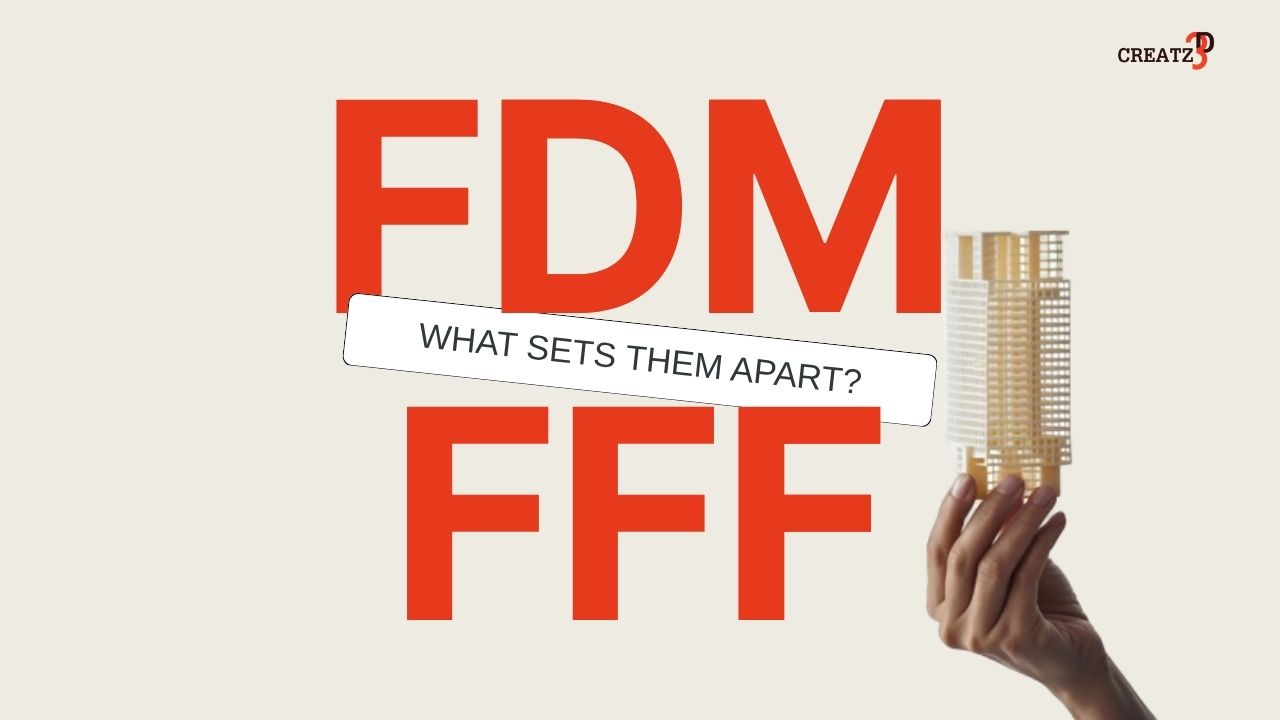


FDM or FFF: What is the difference?
At first glance, FDM and FFF 3D printing appear almost identical. Both technologies use thermoplastic filament, a heated nozzle, and layer-by-layer extrusion to produce parts. However, in industrial manufacturing environments, the differences between the two becomes increasingly important.
FFF, or Fused Filament Fabrication, is a widely used open-material extrusion process commonly associated with hobbyist and entry-level 3D printers. It offers flexibility, accessibility, and lower upfront investment, making it suitable for concept models and rapid prototyping but those printers have some drawbacks.
FDM, or Fused Deposition Modeling, is an industrial-grade extrusion technology developed by our trusted partner, Stratasys. Unlike generic FFF systems, industrial FDM platforms are designed as fully integrated manufacturing solutions with validated hardware, controlled build environments or heated chamber, and qualified material ecosystems.
While both technologies share similar printing principles, they are built for different production outcomes. The focus today is on repeatability, material performance, traceability, and production reliability for businesses who do not evaluate based solely on printer cost or print speed.
Why does repeatability matters in industrial 3D printing?
In manufacturing and regulated industry, printing a part successfully once is not enough. The ability to reproduce the same part consistently across multiple builds, operators and production cycle is mission-critical.
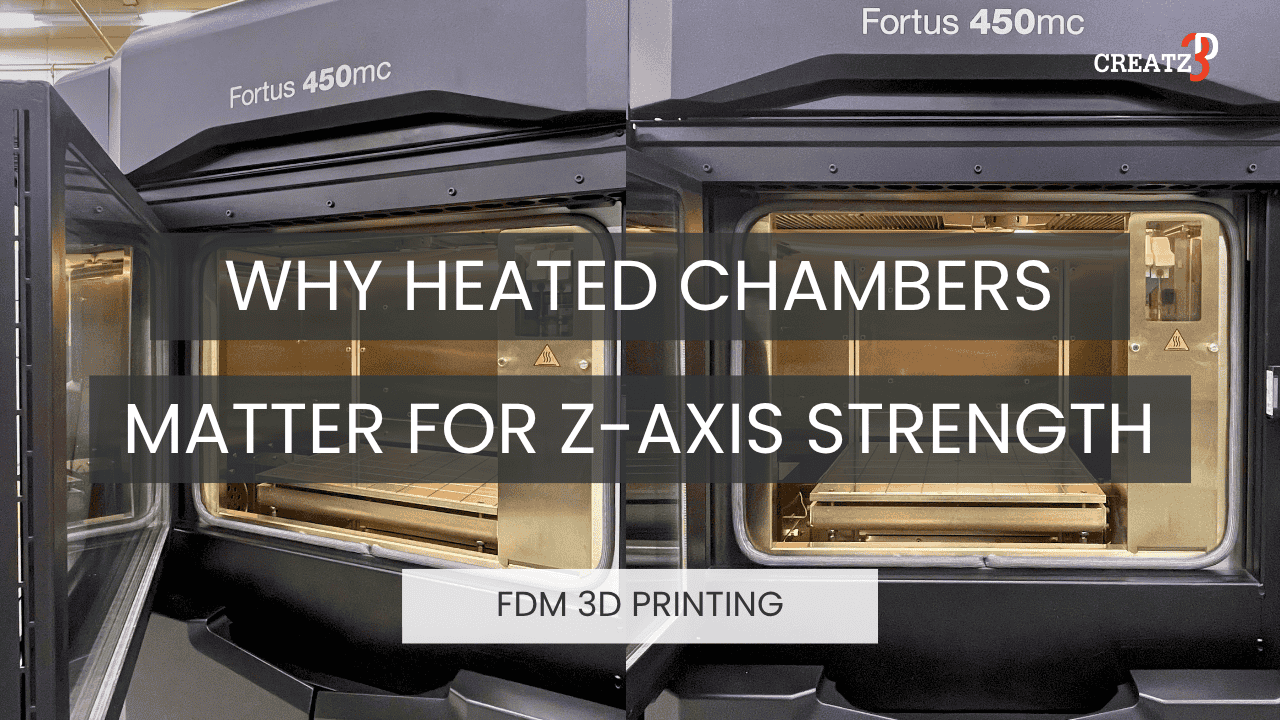
Industrial FDM systems are engineered with enclosed heated chambers, validated toolpaths, and controlled thermal management to minimise warping, improve layer adhesion, and deliver predictable dimensional accuracy. This level of process control supports production-grade applications where consistency is essential. A particularly important role in industrial FDM printing is the role of a heated chamber in FDM printing.
FFF systems can produce high-quality parts, but performance often depends heavily on operator experience, environmental conditions, filament quality, and machine tuning. As production scales, this variability becomes increasingly difficult to manage.
Material Performance and Production Reliability
The gap between FDM and FFF becomes more evident when working with engineering-grade materials.
Industrial FDM platforms support validated thermoplastics such as ABS, Nylon, PC, and high-performance materials like ULTEM™ for aerospace, tooling, and functional applications. These materials are tested for repeatable mechanical properties and long-term production use. Learn more about the 6 proven advantages of AM in aerospace and aviation.
FFF systems commonly use open-material filaments, which provide flexibility for experimentation but may lack certified process controls, material traceability, and predictable performance in demanding environments. Designed for exploration
This distinction is especially important in industries such as aerospace, healthcare, and manufacturing, where quality assurance and documentation are non-negotiable.
Which should you choose FDM or FFF?
FFF remains an effective solution for visual prototypes, educational use, and rapid concept validation where accessibility and affordability are priorities. However, achieving a successful print may require multiple attempts, recalibration, or troubleshooting. For hobbyist users, this process can be part of the experience and appeal.
Industrial FDM, on the other hand, is better suited for tooling, functional prototypes, end-use parts, and low-volume production where reliability, traceability, and repeatability directly impact operational performance. These systems are engineered for efficiency and designed to reduce downtime across production cycles.
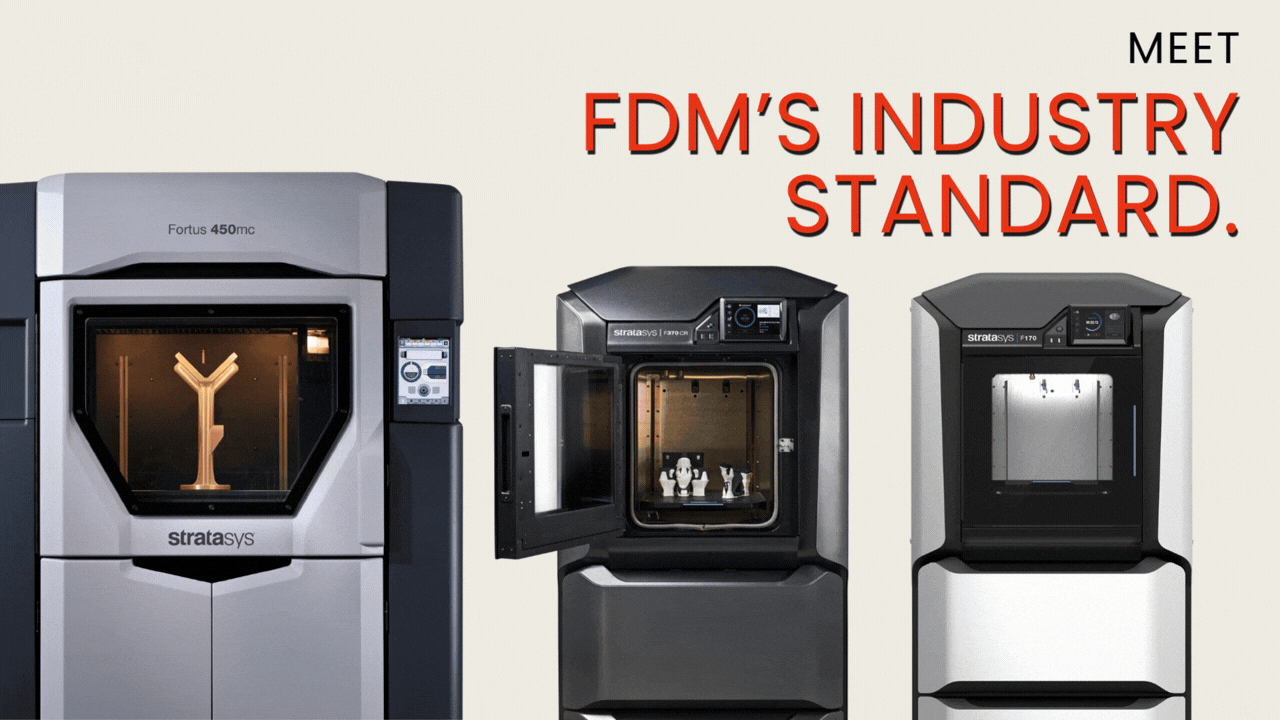
If you are in the position to decide between a hobby-grade machine for as low as SGD1,000 and a professional system that can exceed SGD100,000, there's a way in which paying more costs less (evaluate long-term operational value rather than upfront cost alone). Professional systems support stronger materials, validated workflows, and higher production reliability. For example, Stratasys Fortus 450mc supports high‑performance thermoplastics like ULTEM™ and Antero™, delivering proven record of repeatability and performance for maximum part-yield and printer uptime.
As 3D printing continues evolving from prototyping into digital manufacturing, the decision is no longer just about printing parts. It is about selecting the right additive manufacturing workflow for long-term production success. Durable, production-grade parts require less frequent replacement, reduce downtime, and improve workflow efficiency over time.
So, before you decide to buy either a hobby-grade 3Dprinter for your home shop or a professional 3D printer for your business, check out the insights from real users like Marchesini Group and Champion Motorsport.
Have questions for us?
Fill up our contact form or drop us an email at info@creatz3d.com to speak to our team of expert for more information.