What Can You Create with TPU and Elastomer Materials in 3D Printing?
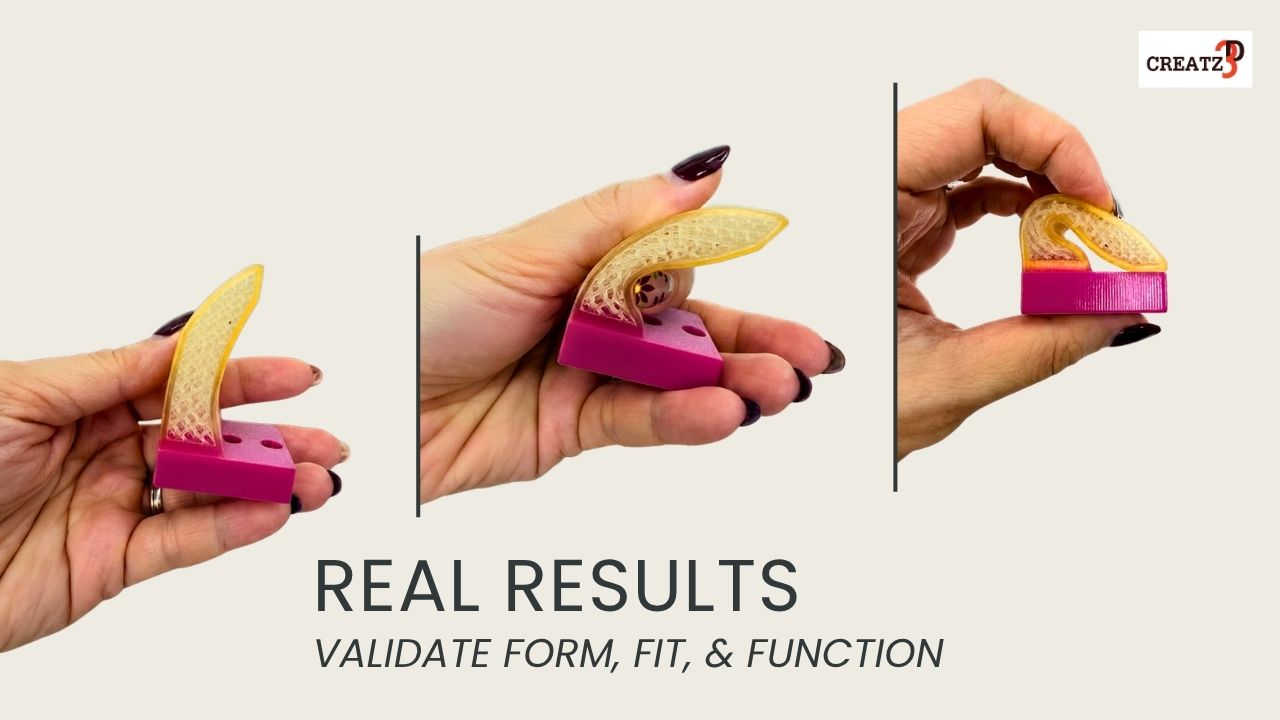
TPU and elastomer materials are expanding what is possible in 3D printing. Once used mainly for prototyping, flexible materials are now supporting real production needs across industries - from manufacturing and aerospace to consumer products, healthcare, and industrial equipment.
With industrial-grade materials like TPU 92A thermoplastics and other polymer materials such as P3 Stretch 80, P3 Stretch IND475, P3 Silicone 25A, Loctite 3D IND402, PJ Agilus30; manufacturers can create elastomer components that combine flexibility with real mechanical performance.
Material hardness is measured using the Shore scale, with Shore A representing softer materials and Shore D representing harder ones. It is typically expressed as a number followed by a letter, such as 92A or 25A - where a higher value indicates a harder and less flexible material.
Here are the top 6 most practical applications of 3D printing today.
1. Flexible Ducts, Bellows, Hoses, Wheels
Industrial TPU 3D printing allows you to produce custom manufacturing supports that are lightweight, flexible, durable and tailored to your system design. Instead of relying on standard parts or waiting for custom molding, engineers can design and produce components that fit precisely into tight spaces or complex assemblies.
Best suited material: TPU 92A
Why it works: High flexibility with strong tear resistance and durability
Compatible 3D System: Stratasys F170, F370, F190CR, F370CR
2. Custom Fixtures and Industrial Interfaces
Flexible materials are used to create interfaces that protect parts, improve grip, and reduce wear in production environments.
Best suited material: TPU 92A
Why it works: Toughness combined with flexibility for repeated use
Compatible 3D System: Stratasys F170, F370, F190CR, F370CR
3. Seals, Gaskets, Protective Covers
Seals and gaskets often require precision fit and reliable elasticity. 3D printing enables rapid production of these parts, especially for low-volume or replacement needs. Protective covers for machinery, connectors, or sensitive components can also be produced quickly, reducing downtime in operations.
Best suited material: TPU 92A, P3 Stretch 80, P3 Silicone 25A, PJ Agilus30
Why it works:
- TPU 92A for durability
- P3 Stretch 80 for smooth, high-detail sealing surfaces
- P3 Silicone 25A for applications requiring softness and biocompatibility
- PJ Agilus30 for flexible and tear-resistant
Compatible 3D System: Stratasys F170, F370, F190CR, F370CR, Origin Two, J8 Series
4. Medical, wearables and skin-contact applications
Elastomer 3D printing opens up opportunities for custom-fit, skin-contact, and wearable components.
Best suited material: P3 Silicone 25A, PJ Agilus30
Why it works: Soft silicone-like feel and suitable for biocompatible and wearable applications.
Compatible 3D System: Stratasys Origin Two, J8 series
5. Soft Grips, and Ergonomic Components
Designers can create ergonomic grips and soft-touch surfaces with precise control over geometry and flexibility.
Best suited material: P3 Stretch 80, Loctite 3D IND402, Loctite 3D IND475
Why it works:
- P3 Stretch 80 for elasticity and finish
- Loctite 3D IND402 for rebound and durability
- Loctite 3D IND475 for UV stability and long-term environmental resistance
Compatible 3D System: Stratasys Origin Two
6. Vibration Dampeners and Shock Absorption Parts
Elastomer materials are well suited for absorbing vibration and impact, making them valuable in industrial environments.
Best suited material: TPU 92A, Loctite 3D IND402, Loctite 3D IND475
Compatible 3D System: Stratasys F170, F370, F190CR, F370CR, Origin Two
When should you consider 3D Printing?
Compared to traditional PU molding, industrial 3D printing offers:
- No tooling required
- Faster lead times (days instead of weeks)
- Easy design iteration
- Cost efficiency for low to medium volumes production
- Create complex geometries and customization
- Solve unique challenges
By combining materials like TPU92A, P3 Stretch 80, Loctite 3D IND402, IND475, P3 Silicone 25A, and PJ Agilus30 businesses can match material performance precisely to application needs - unlocking new possibilities beyond traditional manufacturing.
Have questions for us?
Need a test print or prototyping? Have an internal challenge on applying the right material on your application? Often struggle in solving with your pain points?
Whether through our on-demand services or industrial 3D printing systems, fill up our contact form or drop us an email at info@creatz3d.com to speak to our team of 3D printing experts.