

When did the Aerospace & Aviation industry start using 3D printing?
The aerospace industry has led industrial transformation with 3D printing since its early adoption in 1989. Today, additive manufacturing (AM) represents the next stage of this evolution. The global aerospace AM market was valued at approximately $4.8–$5.9 billion in 2023–2024, with projections exceeding $15–$17 billion by 2030–2033.
Globally, aerospace applications have progressed beyond prototyping into composite tooling, jigs, fixtures, and certified end-use components. Industry studies published by Stratasys highlight manufacturers producing flight-ready air ducts, instrumentation housings, wing structures, and Unmanned Aerial System (UAS) components using industrial additive platforms. This demonstrates that additive manufacturing has transitioned from experimental use to operational deployment in their production flow.
In Singapore, the focus will be on adopting advanced manufacturing techniques, exploring new materials like composites, and leveraging technologies and predictive maintenance. As a regional aerospace hub anchored by the Civil Aviation Authority of Singapore and strengthened by advanced aerospace manufacturing clusters and industry associations, both home-grown enterprises and multinational partners face operational demands to:
- Shorten turnaround time for MRO operations
- Localize production of complex aircraft parts and components
- Strengthen supply chain resilience amid global disruptions
- Improve manufacturing flexibility for specialize aerospace components
- Maintain strict regulatory and safety compliance
- Accelerate smart mobility solutions
AM directly supports these strategic priorities by enabling faster production cycles, decentralized manufacturing capability, digitalization and weight-optimized component design aligned with regulatory requirements.
What are the industry challenges?
Aerospace and aviation procedure requires strict standards in precision, weight, certifications and speed including:
- Tight tolerances
- Flame, smoke and toxicity compliance
- Structural integrity under thermal and mechanical stress
- Traceability and documentation
- Production scaling and low-volume customization
Conventional or traditional methods (such as CNC, casting, injection molding) usually fall short in these areas:
- Long tooling lead times (from weeks to months)
- High upfront mold and tooling investment
- Material waste
- Limited design freedom
- Escalating costs for engineering changes
These limitations make conventional manufacturing inefficient for low-volume aerospace components and rapid design changes. As development cycles accelerate and regulatory requirements remain stringent, manufacturers increasingly require more flexible production methods that can deliver precision, compliance, and faster turnaround.
Why Additive Manufacturing is strategically different?
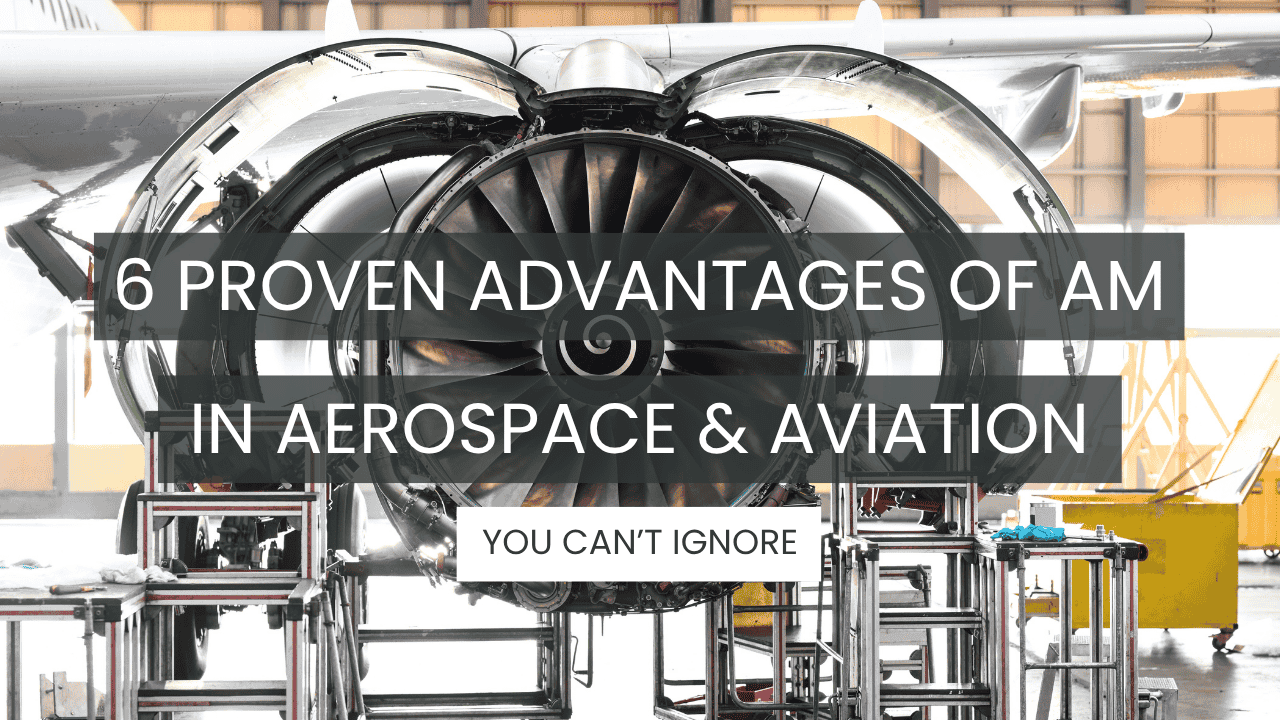
AM turns complexity into advantage especially for aerospace and aviation industry. Unlike subtractive methods, intricate designs, internal channels, lattices, weight-optimized geometries, and integrated assemblies are feasible without secondary tooling. Here's the 6 proven additive manufacturing advantages :
1. Scaling impacts across applications
- Rapid part replacement for MRO providers
- Customized interiors, manufacturing aids and fixtures for OEMs
- Iterative structural designs for UAS
- Optimized composite tooling
- Weight reduction parts without compromising strength
2. Supports applications from supplementary tool to core capability
a) Composite Tooling
- Structural repair tooling
- Layup molds for hand or vacuum-formed composites
- Sacrificial tooling
- Assembly tools and templates
- Master patterns for composite part forming
b) Jigs & Fixtures
- Assembly, machining and inspection
- Ergonomic jigs
- Ground support equipment
- Wiring conduits
- Trim and drill guides
- Manufacturing aids
c) Production Surrogates
- Installations and assembly process
- Training aids for operation and service technicians
- Component or sub-assembly like desired part annotation, such as “Remove before flight.”
d) End-Use / Production Parts
- Instrument housing and enclosures
- Seat frameworks, tray tables, interior cabin parts
- Latches and brackets
- Ground support parts
- Bespoke fittings for customer aircrafts
e) Functional Components
- Weight-optimized structural elements like wing ribs, fuselage panels
- Non-critical structure areas like brackets and mounts
- Insulation and air flow components like heat exchangers, ventilation, ECS tubes and ducts
- Seals, protective covers, vibration dampeners, gaskets, mats, wheels, bellow
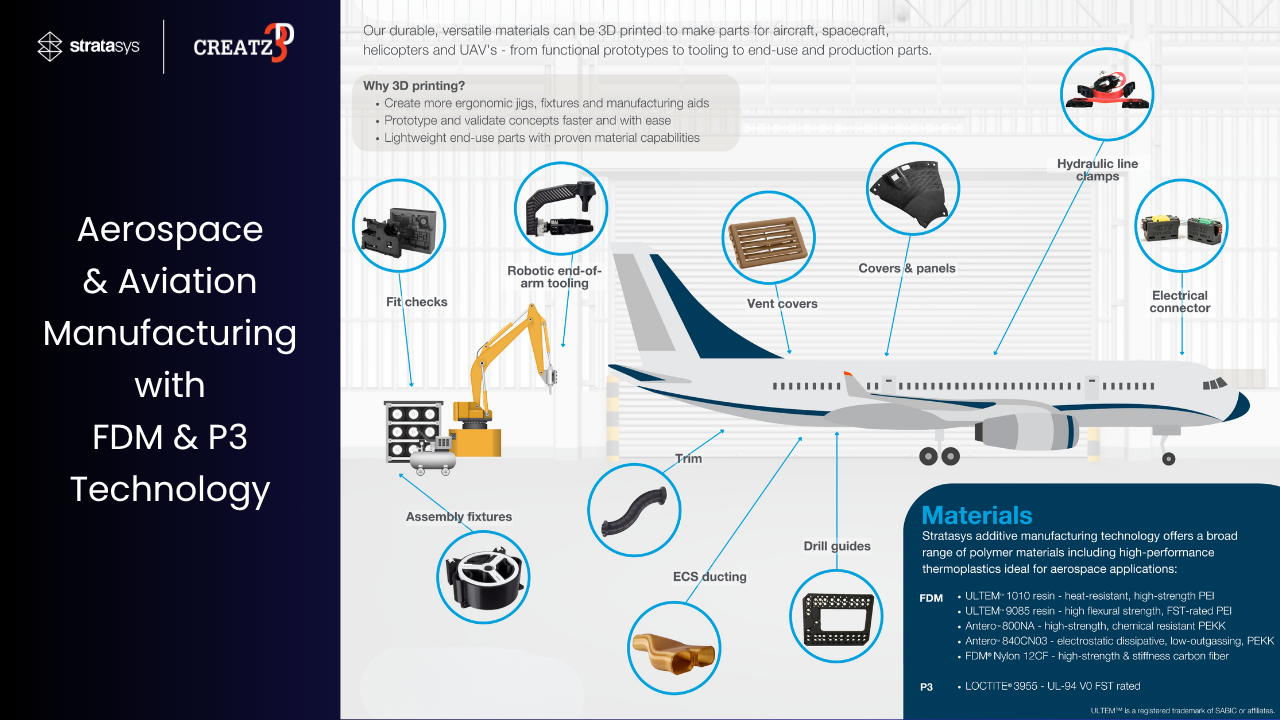
3. Wide range of advanced materials and technologies
Today’s advanced 3D printing materials and industrial-grade systems enable companies to produce high-precision parts in repeatable production environments, ensuring consistent mechanical properties and supporting scalable manufacturing for aerospace and aviation landscape. Here's the top 2 commonly used 3D Printing production systems :
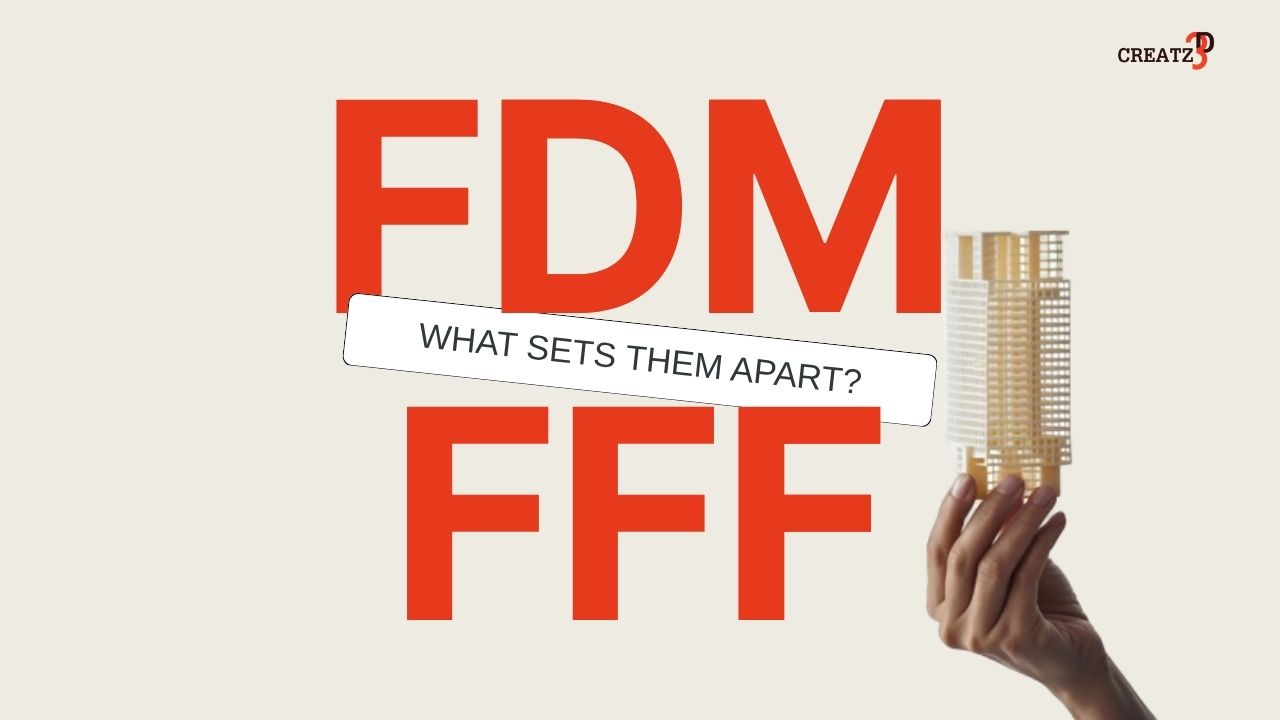
i) Fused Deposition Modeling (FDM)
FDM Technology capabilities :
- Large-format structural printing
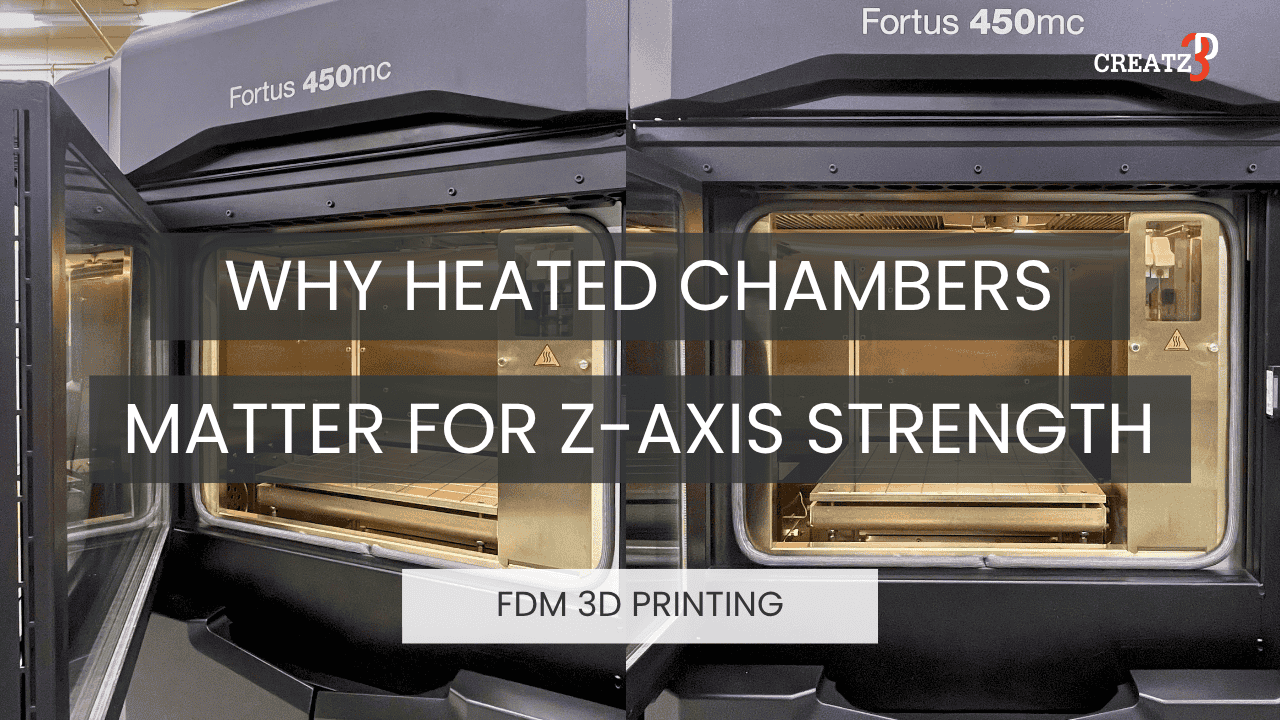
- Repeatable and controlled build environments with heated chamber
- Traceable output for regulated applications
- Industrial-grade thermoplastic material properties
FDM thermoplastics material that are commonly adopted:
- ULTEM™ 9085 resin - Used for certified interior components due to its strength-to-weight performance and flame-retardant properties (UL 94 V0 rated), supporting cabin compliance requirements.
- ANTERO 840CN03 - PEKK-based with electrostatic discharge (ESD) capability and ultra-low outgassing characteristics, suited for highly customized, low-volume aerospace parts.
- ANTERO 800NA - Another PEKK-based offering high chemical resistance, ultra-low outgassing, and elevated heat resistance, making it suitable for aircraft and space environments.
- FDM Nylon 12CF - Combines nylon 12 base polymer with chopped carbon fiber, 35% by weight. Delivers the highest strength and stiffness-to-weight ratio that allows alternative replacement to metal components, achieving up to 75% weight saving.
ii) DLP / P3™ (Programmable Photopolymerization)
DLP / P3 Technology capabilities :
- High-resolution, isotropic part performance
- Consistent accuracy across production batches
- Smooth surface finish with injection-molding quality suitable for interior components
- Scalable low-volume end-use production
DLP / P3 photopolymer materials that are commonly adopted:
- Loctite 3D IND3380 ESD - High temperature resistant resin that offers a smooth surface finish comparable to injection molding quality.
- Loctite 3D 3955 FST - Certified burn-resistant with strong mechanical performance, suited for HVAC components, connectors, clamps, and functional aerospace components.
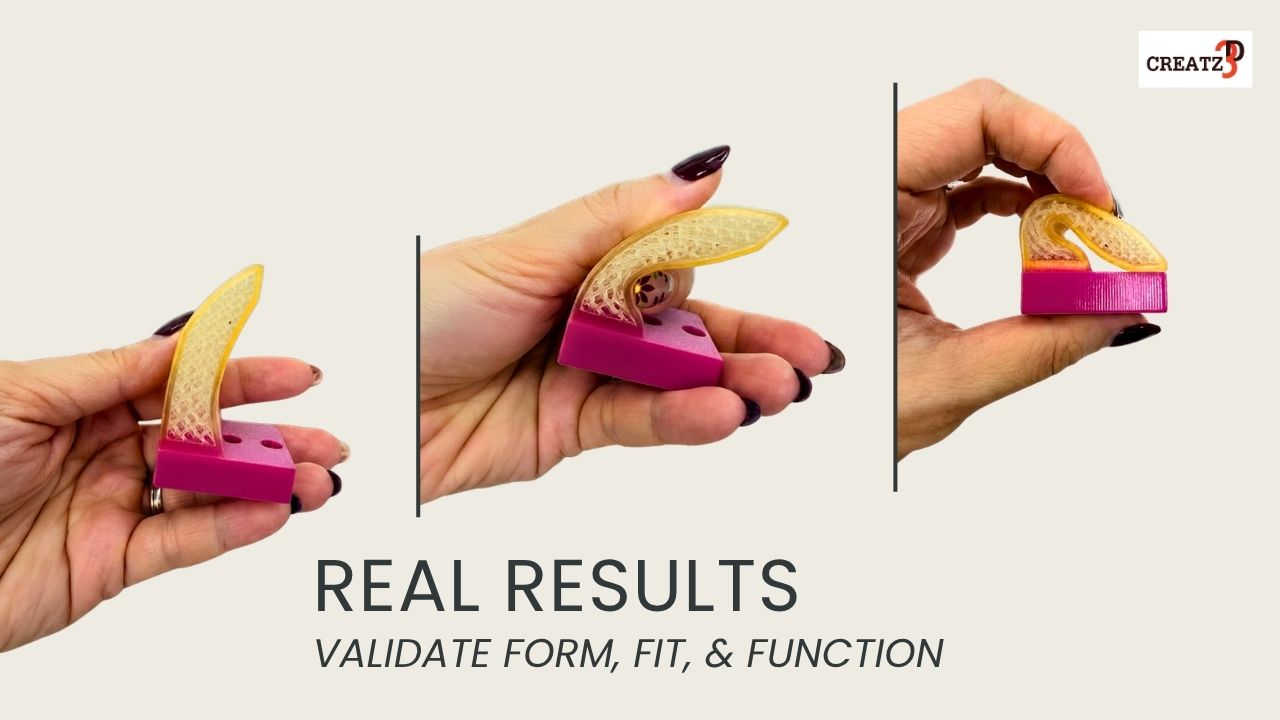
- Stretch 80 - Versatile elastomer suitable for flexible, tear-resistant, rubber-like prototypes, tooling, and part fit-and-form checks.
4. Benefits of using high-performance Industrial 3D polymer materials
- Flame-resistance and fire-safety standards as defined under FAA regulations
- Chemical resistance
- Durability, stiffness, and toughness
- Thermal stability
- Lightweight & High strength
- Predictable mechanical performance
- Strong and aesthetic for smooth surface finish
- HDT & ESD properties
5. Focus on engineering-first model
Additive manufacturing isn't about machine or technology selection. It should begin with application validation and objective. An engineering-first engagement model ensures:
- Structural performance assessment
- Regulatory alignment
- Material suitability verification
- Workflow integration planning
- ROI modelling for low-volume production
This approach reduces risk while accelerating meaningful adoption and scalable production. Many Singapore companies adopt a hybrid approach - starting with our service-based printing before scaling into in-house additive manufacturing with the right equipment and training.
6. Beyond cost reduction
Additive manufacturing delivers more than operational savings. It enables:
- Faster certification cycles
- Reduced tooling dependancy
- Agile design iteration
- Decentralized production capability
- Competitive differentation through optimized design
Ready to Explore the Next Step?
Request for a free consult with our expert today to discuss on your challenges and prepare a strategy that fits your needs.