

Why 3D Printing Is Growing in Singapore
3D printing in Singapore has moved well beyond rapid prototyping. Today, it plays a strategic role across manufacturing, product development, engineering, healthcare, and design-driven industries. As businesses seek faster innovation cycles, supply chain resilience, and cost efficiency, additive manufacturing is increasingly viewed as a practical production solution — not just an experimental technology.
Singapore’s growth in 3D printing is the result of long-term planning and early investment in advanced manufacturing. Recognizing the potential of additive manufacturing early on, the government committed S$500 million in 2013 under the “Future of Manufacturing” initiative, which led to the formation of the National Additive Manufacturing Innovation Cluster (NAMIC).
Since then, NAMIC has played a central role in connecting research, industry, and government, helping new ideas move from development into real industrial use. Its focus on ecosystem building, applied research, and commercialization has positioned Singapore as a recognized additive manufacturing hub in Asia, where innovation leads to practical outcomes.
Singapore’s strong manufacturing base, combined with its emphasis on advanced technologies, has accelerated the adoption of 3D printing. Companies are leveraging additive manufacturing to shorten lead times, control costs, and enable design flexibility that traditional methods cannot easily achieve.
From SMEs to multinational corporations, the demand for industrial-grade 3D printing in Singapore continues to rise, especially for applications such as jigs and fixtures, functional prototypes, end-use parts, and low-volume production.
1. Understanding the Right 3D Printing Technology
Choosing the right 3D printing technology depends on application, material requirements, and performance expectations.
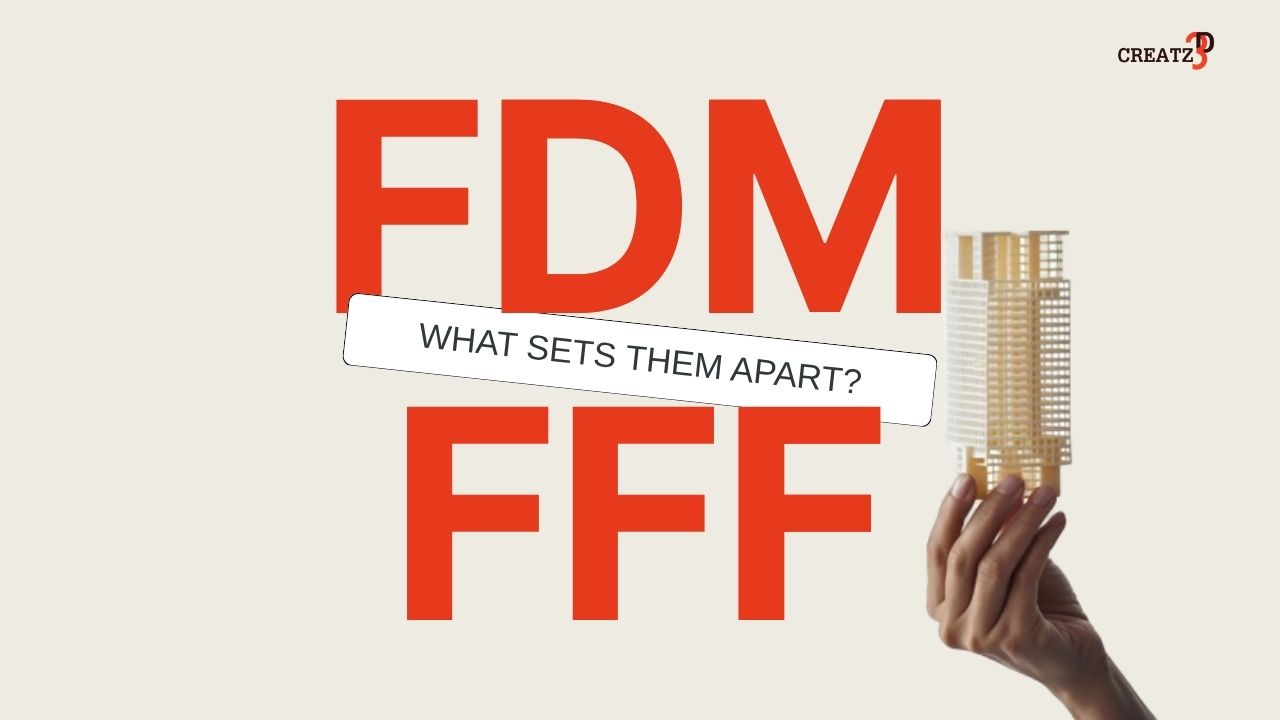
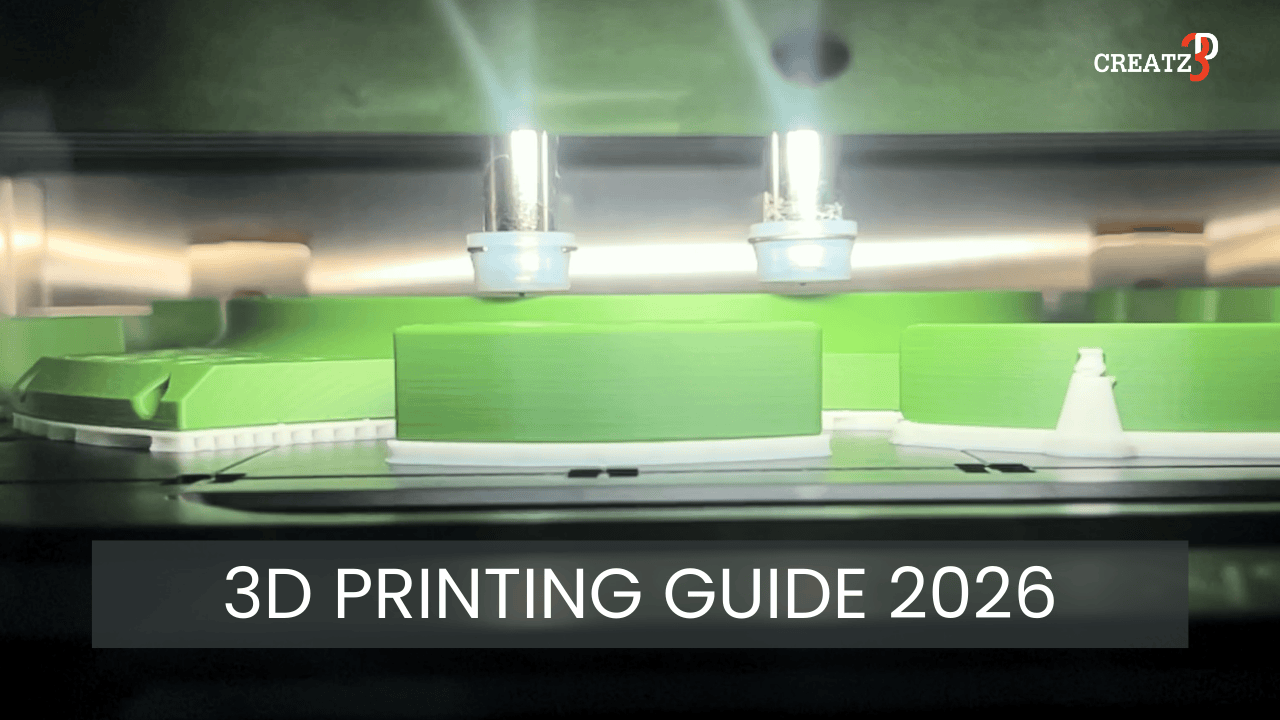
- Fused Deposition Modeling (FDM) - Commonly used for functional prototypes, manufacturing support, fixtures, and tooling where strength and practicality matter more than surface finish.
- Stereolithography/ Digital Light Processing (SLA / DLP) - Well-suited for high-detail prototypes, design validation, and visual models requiring fine features and smooth surface finishes.
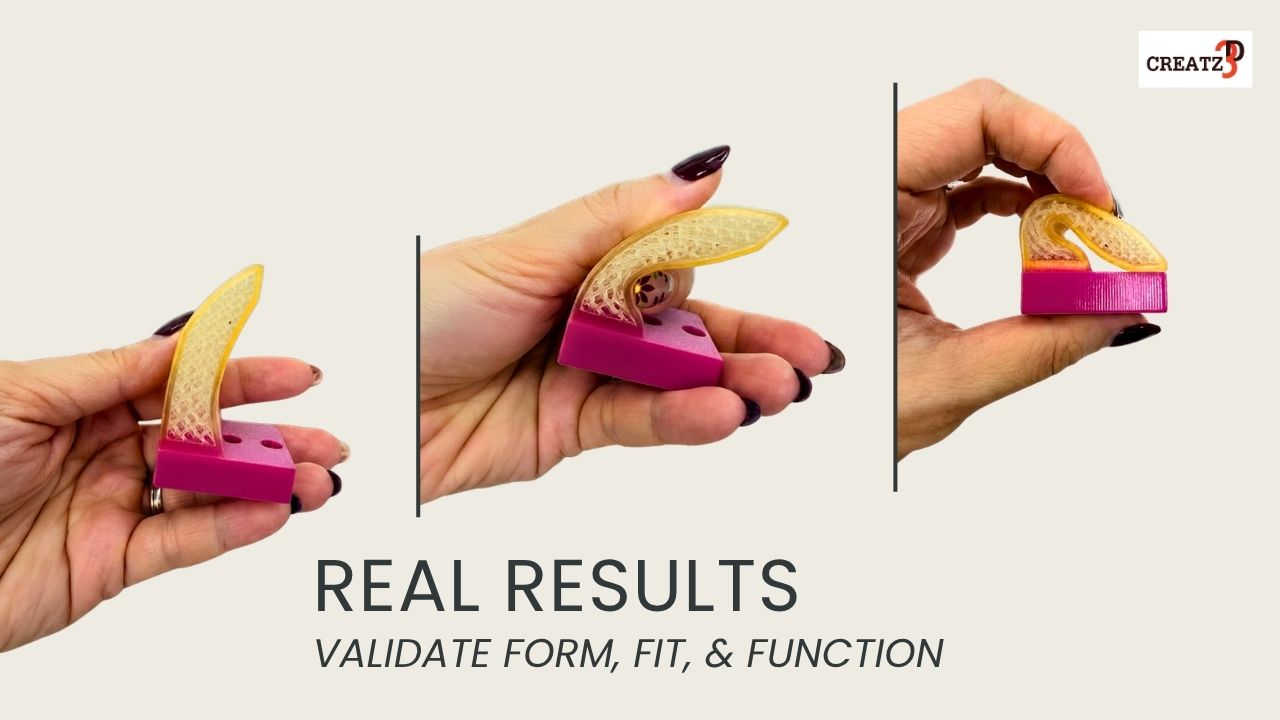
- Polyjet (Material Jetting) - Ideal for exceptional precision and versatility with multi-material, multi-color parts with high accuracy, enabling realistic prototypes, medical models, and ergonomic validation.
- Selective Laser Sintering / Multi Jet Fusion (SLS/MJF) - Suitable for functional parts and small-batch production with excellent mechanical strength and design freedom.
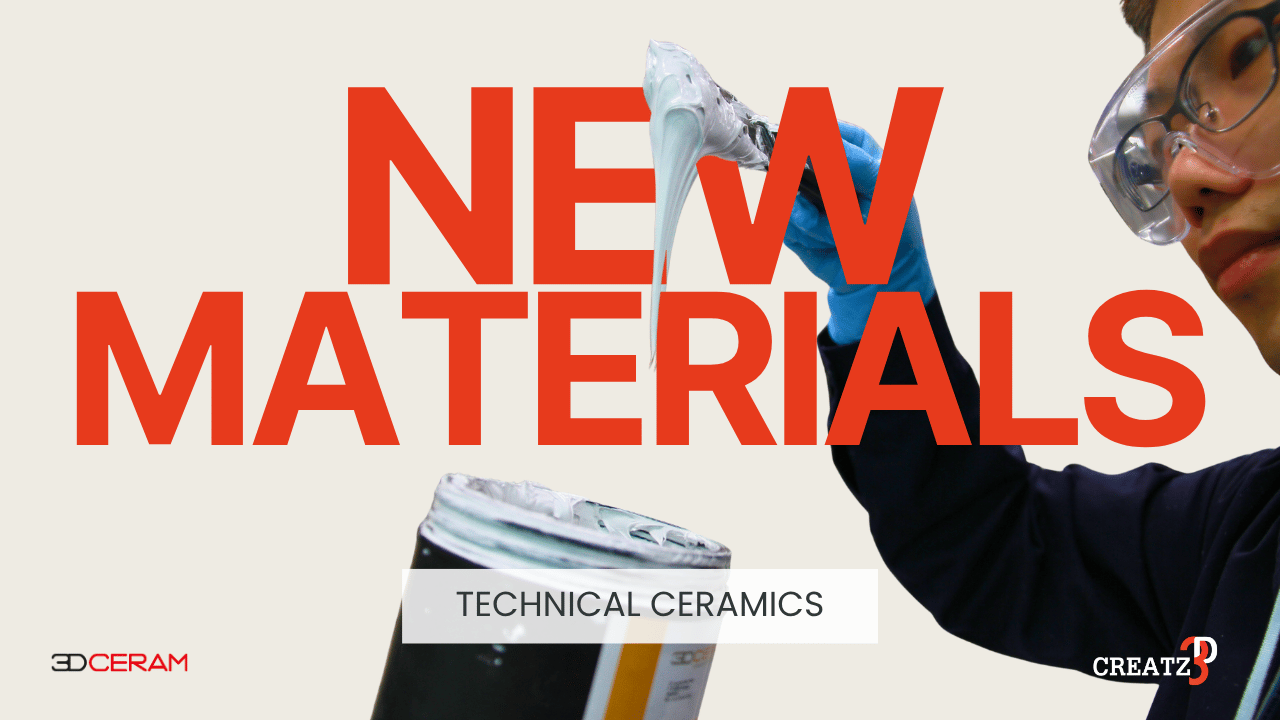
- Ceramic Additive Manufacturing (SLA/DLP/LCM) - Increasingly adopted for complex geometries, excellent mechanical properties, and performance-critical parts in space, electronics, and advanced engineering applications.
- Metal Powder Bed Fusion (SLM) - Used for high-performance metal components requiring strength, heat resistance, and lightweight structures in aerospace, medical, and industrial sector.
Learn more about our range of 3D printing technologies.
2. Understanding 3D Printing Materials
Material choice plays a major role in how a printed part performs. In Singapore, businesses are increasingly moving beyond basic plastics and exploring materials that meet functional and industrial requirements. Commonly used materials include:
- Basic Engineering grade thermoplastics such as ASA, ABS, and TPU for early-stage prototypes, production aids and visual models.
- High-Performance grade thermoplastics such as ULTEM, Antero (PEKK), Nylon reinforced composites, and high-performance polymers for functional parts, fixtures, and tooling.
- Resins for applications that require fine details, smooth surfaces, aesthetics or visual accuracy.
- Metal powders such as stainless steel, copper, and titanium for strength-critical or heat-resistant components.
- Technical Ceramic such as alumina, zirconia, aluminium/silicon nitride for high-stress environment that requires thermal resistance, superior strength and stability.
Choosing the right material ensures parts are not just printable, but fit for purpose - whether for testing, production, or end-use. Learn more about our range of Polymer Materials or Technical Ceramic Materials.
3. Unlocking New Design Opportunities
One of the most overlook benefits of 3D printing is how it changes the way parts are designed. Additive manufacturing allows engineers and designers to move away from traditional manufacturing constraints. With 3D printing, it becomes possible to:
- Create complex internal geometries and lightweight structures
- Combine multiple components into a single printed part
- Customise designs without additional tooling costs
- Optimise parts for performance rather than manufacturability alone
These design freedoms are particularly valuable in industries where weight, space, or performance are critical - and where traditional methods struggle to keep up.
4. Design for Additive Manufacturing (DfAM)
Designing for additive manufacturing helps ensure parts print successfully, perform as intended, and remain cost-effective. Designs created for traditional manufacturing often need adjustments to suit 3D printing.
Good DfAM focuses on appropriate wall thickness, sufficient clearances, and part orientation that balances strength, surface quality, and print time. Where possible, multiple components can be combined into a single printed part to reduce assembly and cost.
Common issues such as overly thin features, unsupported overhangs, or incomplete files can lead to print failures or unnecessary rework. Preparing clean, properly scaled files early helps streamline the entire process. Preferred formats are STL, OBJ, VRML, STEP, IGS and etc.
5. How Industries Are Applying 3D Printing
Across Singapore and beyond, 3D printing is already being applied in practical ways across multiple sectors:
- Manufacturing & engineering teams use it for tooling, fixtures, and replacement parts that reduce downtime.
- Product design & FMCG teams rely on it for faster concept validation, hyper-realistic, and packaging development.
- Electronics and precision engineering like aerospace and semiconductor companies use it for functional enclosures, production tooling, and inspection aids.
- Healthcare, Education & R&D environments use it to accelerate innovation, experimentation, and exploration.
- Defense & Marine use it to produce spare parts, tools, and lightweight components directly where they’re needed, whether in depots, in the field, or aboard ships and aircraft.
- Art & Fashion use it to express unparalleled freedom of expression, that are truly unique without any limitation on shape, texture and color.
These applications highlight how additive manufacturing fits naturally into existing workflows, rather than replacing them entirely. Learn more about industry overview and how Kinetic Vision, an R&D firm leverage on Polyjet 3D printers to drive innovation.
6. Quality, Accuracy & Tolerances Considerations
Quality and consistency are key considerations when using 3D printing for business applications. While additive manufacturing offers flexibility, expectations around accuracy and finish vary by technology.
Tolerances depend on the printing process, material, part design and application type. FDM specializes in large, strong and accurate parts including complex geometries in the range of ±0.2mm or higher. Polyjet, SLA, and DLP matches precision-focused applications, repeatability and unparalleled accuracy in the range of ±0.02mm or higher.
Surface finish also differs by technology. FDM parts typically show visible layer lines, while SLA/DLP produces smoother surfaces. Polyjet offers hyper-realistic and stunning aesthetics parts. SLS and MJF parts have a uniform, matte finish suited for functional use. Post-processing can further improve appearance and performance when required.
Quality control typically includes dimensional checks, visual inspection, and fit testing. For industrial applications, consistent processes and inspection ensure printed parts meet functional and reliability requirements.
7. Production Considerations
As 3D printing moves into production use, practical factors such as lead time, scalability, and cost become increasingly important.
Lead times are one of the strongest advantages of 3D printing. Parts can often be produced within days rather than weeks, especially when compared to tooling-based methods. This makes it ideal for urgent requirements, design changes, or short production runs.
Batch sizes and scalability are flexible. 3D printing works well for single parts, small batches, and low-volume production. While it may not replace mass manufacturing, it fills the gap between prototyping and full-scale production, allowing businesses to scale without committing to tooling upfront.
Cost drivers typically include material selection, build time, part size, and post-processing. Costs can often be optimised through design adjustments, part consolidation, and choosing the most suitable technology rather than the highest-spec option.
8. Industry Standards & Compliance
In certain industries, compliance and documentation are critical.
For medical, aerospace, or industrial applications, 3D printing may need to align with specific standards, certifications, or quality requirements. This can include controlled processes, validated materials, and defined inspection procedures.
Material traceability and documentation are often required to support audits, internal approvals, or regulatory needs, ensuring transparency from raw material through to finished part
9. Using 3D Printing Services vs Owning a 3D Printer
Business in Singapore often consider whether to use a 3D printing service bureau or investing their own equipment.
- On-demand 3D printing or Consultation-led services provide access to multiple technologies, materials, and expertise without upfront investment. This approach works well for project-based needs, variable production volumes, or when exploring new applications.
- Owning an Industrial 3D printer makes sense for organisations with regular usage, dedicated R&D teams, or confidentiality requirements.
Many Singapore companies adopt a hybrid approach - starting with service-based printing before scaling into in-house additive manufacturing with the right equipment and training.
10. Desktop vs Industrial 3D Printers
One of the most common questions businesses ask is whether a desktop 3D printer is sufficient, or if an industrial-grade system is the better long-term investment..
Desktop or hobby-grade 3D printers are accessible and affordable, but often come with limitations in build size, material options, and long-term consistency. Typically used for:
- Concept models and early-stage prototypes
- Basic functional testing
- Educational environments
Industrial 3D printers such as systems from Stratasys & 3DCeram are purpose-built for professional and production environments. They are designed to deliver greater reliability and scalability as your business requirement grows. Perfectly designed for:
- Repeatable, high-quality output
- Engineering, validated and production-grade materials
- Larger build volumes and tighter tolerances
- Integration into manufacturing workflows
For organisations looking beyond experimentation and toward dependable, long-term additive manufacturing capability, industrial 3D printers are not just an upgrade. They are the foundation for sustainable, production-ready 3D printing.
The Future of 3D Printing in Singapore
3D printing in Singapore is no longer about experimenting with new technology for its own sake. It is about using the right tools, materials, and designs flexibility to solve business problems.
As additive manufacturing continues to mature, it will play an increasingly important role in production, development, and innovation. Businesses that understand how to apply 3D printing strategically - whether through services, industrial systems, or a combination of both - will be better equipped to adapt and stay competitive.
To learn more about additive manufacturing applications, technologies, 3D printing and consultation-led services, connect with us today or check out our case studies page to read more on real-world applications.